
Why Double-Decker Buses Became City Icons: A Beginner's History Explainer
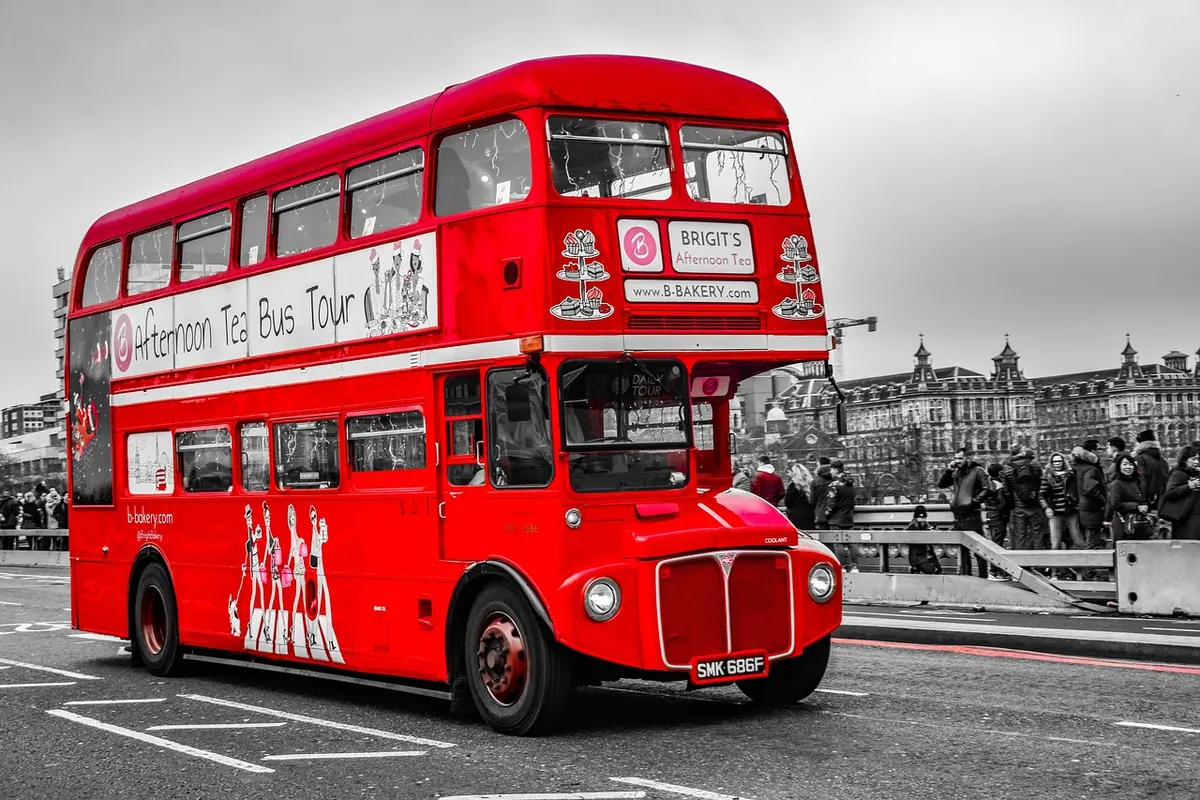
Ask someone to sketch a bus and there's a decent chance they'll draw two rows of windows. That silhouette is so familiar it's easy to forget it began as a practical answer to a stubborn problem: how do you move more people down a street that cannot get any wider? The answer arrived in stages, over roughly a century, as horses gave way to engines and open benches gave way to enclosed saloons.
From Horse Omnibus to Open-Air Upper Deck
Horse-drawn omnibuses started carrying paying passengers in Paris in the 1820s and reached London within a few years, running fixed routes with fixed fares. They were essentially long carriages: a driver at the front, passengers inside, and a lot of unused roof.
Operators soon noticed that roof. By the 1840s and 1850s, buses in London and other European cities had benches up top, reached by a ladder, with a low rail to stop people sliding off. In Britain the trade called them garden seats. They were cheap, exposed to rain and chimney smoke, and enormously popular with passengers who could not afford an inside seat.
Seating evolved too. The later "knifeboard" layout put a long central spine on the roof, with passengers sitting back to back and facing outwards over the street. It packed in more fares and gave everyone a view. It was also miserable in bad weather, which is why fully covered upper decks eventually replaced it.
Engines, Roofs and Stairs
Motor buses appeared around the turn of the twentieth century, and early operators treated the upper deck as a fair-weather bonus. Many kept it open, or fitted a canvas cover that could be rolled back on sunny days. Covered tops and internal staircases became normal between the 1920s and 1940s, and the double-decker finally became an all-weather vehicle rather than a summer treat.
Mechanical progress changed the vehicle from the inside out. Diesel engines, pneumatic tyres, power steering and automatic transmissions made a tall, heavy bus manageable in traffic. Rear-engine layouts later freed the front of the vehicle for a second door and a flat floor, which is why many modern double-deckers let you board at the front and step straight into a wheelchair space on the lower deck.
Why Cities Kept Choosing Two Decks
Plenty of cities tried double-deckers and went back to single-deck buses or trams. The ones that stayed usually had a combination of these conditions:
- Capacity per metre of kerb. A two-deck bus carries far more people in the same road space and takes up less room at a stop than two single-deckers.
- No track and no overhead wires. Buses can be rerouted when a street closes or a neighbourhood changes. Rails and trolleybus wires cannot.
- Narrow streets and tight turns. In dense old city centres, a double-decker can often follow a route where a long articulated bus would struggle to turn.
- Revenue from the view. The upper deck sells tickets on sightseeing routes, where the ride is the attraction.
- Familiarity. Once a city's depot, workshop and driver training are built around two-deck vehicles, switching is expensive.
Three Vehicles That Built the Reputation
No single bus explains the double-decker's fame, but a few designs did most of the persuading.
London's Routemaster
Designed in the early 1950s and in service from the middle of that decade, the Routemaster used a lightweight aluminium body and independent front suspension, which made a large bus unusually pleasant to drive. Its rear open platform, worked by a conductor, let passengers step on and off between stops. That platform is the reason people still argue about it decades after it left front-line service in 2005, kept alive on a couple of heritage routes.
Hong Kong's High-Capacity Workhorses
Operators in Hong Kong pushed the design in a different direction: three axles, air conditioning, and bodywork built for heat, humidity and steep hills. If you want to see how much punishment a double-decker can take and still run on time, that is the fleet to watch.
The Sightseeing Open-Topper
Strip the roof off, add a recorded commentary and a hop-on hop-off ticket, and the same basic vehicle becomes a tourist attraction. It is the clearest proof that the upper deck is not just extra capacity — it is a seat with a view.
The Limits You Never Notice From Upstairs
Height is the constraint that shapes everything. A double-decker stands roughly four to four and a half metres tall, which puts low bridges, railway overpasses, tram wires, tree canopies and shop awnings squarely in its way. Cities that run them keep lists of low bridges, and a diverted bus can be sent miles out of its way by a single arch. When you see a warning sign reading "low bridge" on a bus route, it exists because someone once ignored it.
Weight and stairs matter too. A full upper deck raises the centre of gravity and loads the axles, so some older roads and bridges are off limits. Boarding is slower, because everyone funnels through one or two doors and then climbs. And anyone who cannot manage stairs is confined to the lower deck, which is why low-floor layouts, ramps and kneeling suspension have become standard on new fleets.
Beyond the Postcard Image
Double-deckers are not a British-only habit. Dublin and Belfast have long built their networks around them. Mumbai has run them for decades. Singapore, Berlin and a number of North American cities have used them on busy or express routes, and open-top versions operate in dozens of tourist cities. The pattern is consistent: where a route is busy, the street is tight, and the stop is short, two decks often beat one.
Riding One: Practical Notes for a First Trip
The front seats upstairs give the best view but the roughest ride, because you are sitting over the front axle. The back upstairs is smoother but noisier. If you are unsteady on your feet, climb the stairs while the bus is stopped, use the handrail, and never stand on a staircase in a moving bus — on older vehicles the stairs are steep and the ceiling above them is low.
On a rear-platform bus, wait until the vehicle has fully stopped before stepping on, and let the conductor see you. On a modern front-entrance bus, pay or tap as you board and move clear of the doorway; bags left in the aisle are the most common cause of trips and tumbles. On open-top tours, keep an eye out for low branches and remember that the top deck catches the wind even on a mild day. And if you are the one planning a route, ride it yourself before you print a timetable: bridges, trees and school-time traffic will tell you more than any map will.